

Since 1997 the Study Center has hosted a diverse series of lectures by local and visiting archaeologists. These events bring together the wider community working on Crete and offer a chance for colleagues to discuss new finds and ideas. The lectures are held in the central court of the Study Center or in the refurbished Customs Building at the harbor of Pacheia Ammos. Several events have also been cross-listed as part of the Minoan Seminar.
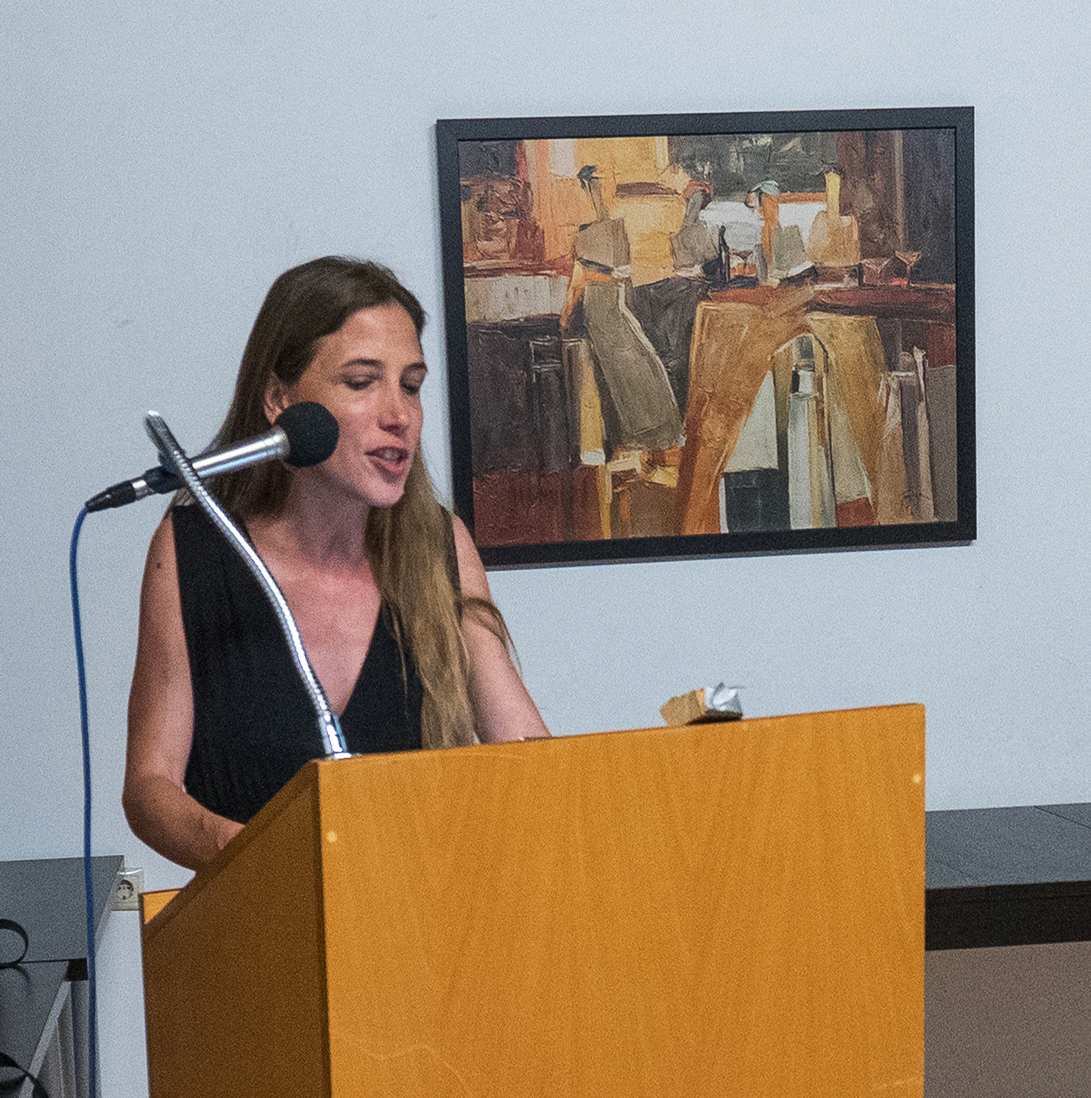

Lecture in the Customs Building of Pacheia Ammos in 2019. (left) Lecture in the central court of the Study Center in 2014. (right)
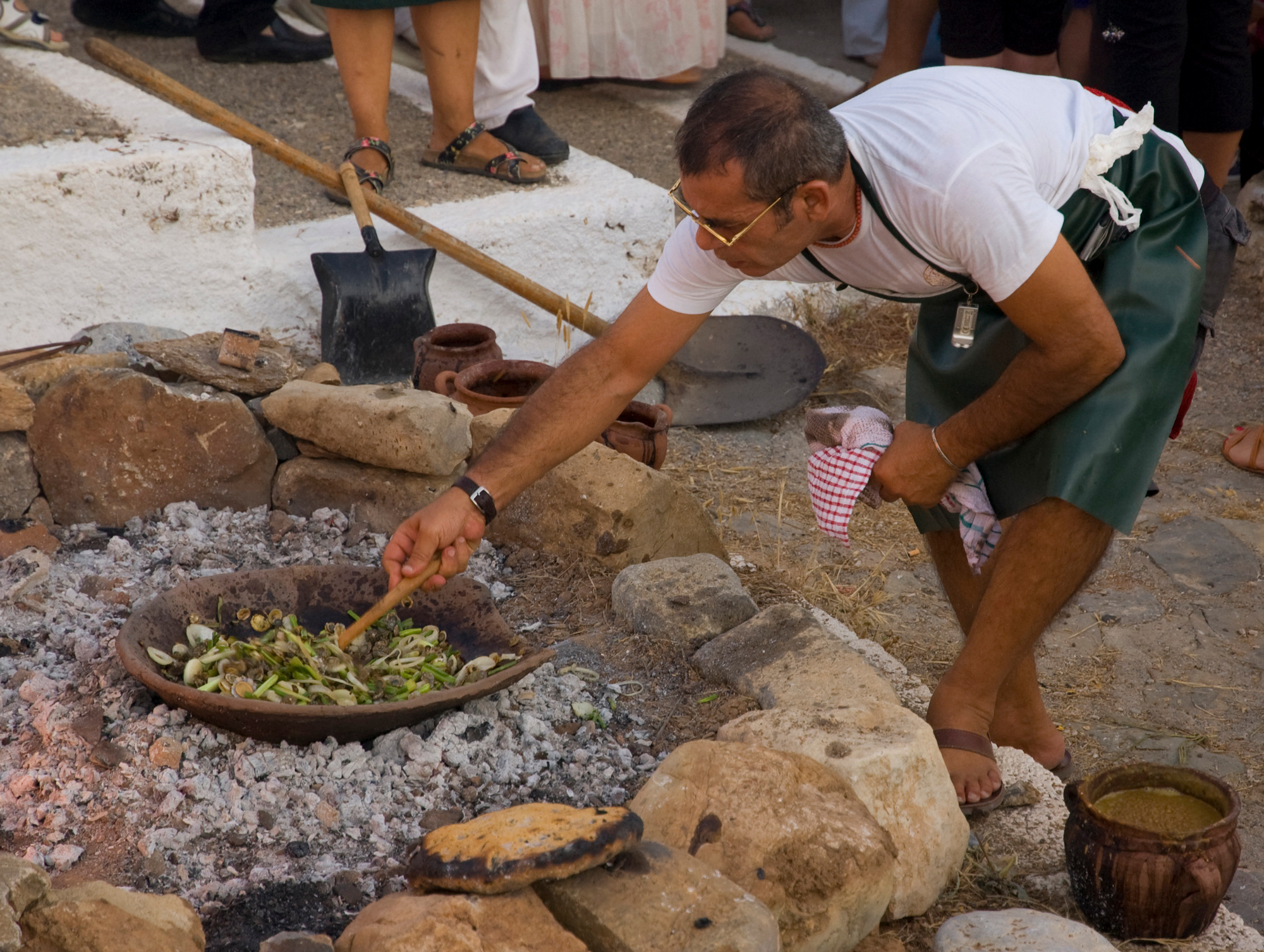
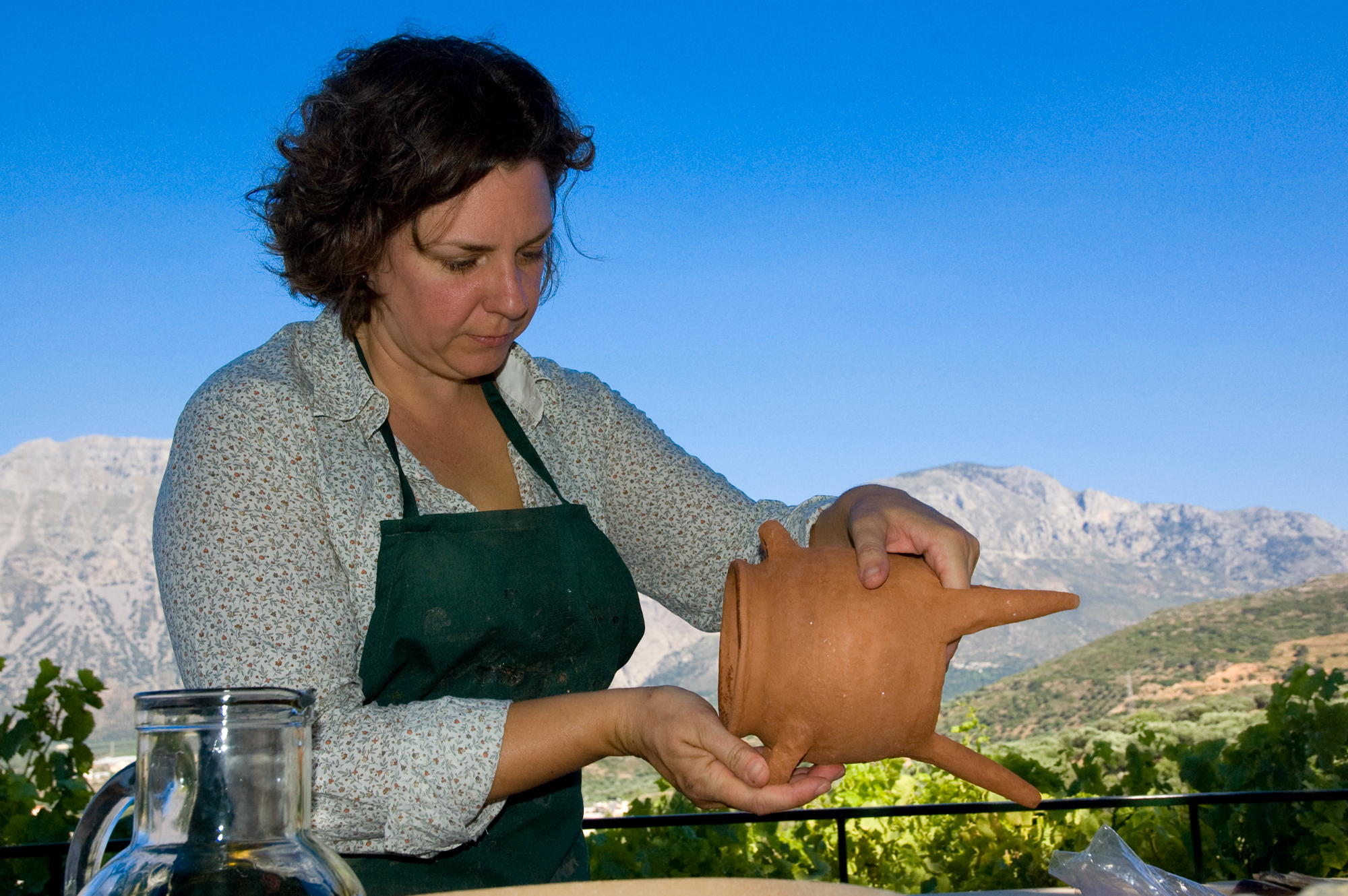
Experimental archaeology: Jad Alyounis (left) prepares a “Minoan meal” at Papadiokampos as part of the summer festival in Siteia in 2011. Jerolyn Morrison (right) serves a “Minoan Meal” at the Study Center in 2009. Similar events have been held on several occasions at the Study Center, in the town of Ierapetra, in the village of Anatoli, and at the American School of Classical Studies at Athens under Jerolyn Morrison’s careful leadership. The events are extremely popular and have given new meaning to the term “paleodiet.”
Upcoming Lectures
Please note that some lectures are held in person while others are delivered online.
2026
Wednesday, December 2, 2026 at noon Eastern Time and 7 pm in Greece. – Flint Dibble, Cardiff University, “The Problem with Fake Archaeology. And what we can do about it.”
Please use this link for registration:
https://us02web.zoom.us/meeting/register/dXbDJCoMR3edFixx9WNTXw
Abstract
Over the last few decades, archaeology has been under attack from many fronts. Pseudoarchaeology has dramatically increased in popularity. While it might seem easy to laugh off and ignore, as these claims are widely divorced from the reality of our lived experience as archaeologists, the savvy tactics used by pseudoscientist influencers means that misinformation has a real cost on the field of archaeology and its stakeholders.
Pseudoarchaeologists have an outsized impact on the public perception of our field, with best-selling books in the archaeology section, top TV shows and online videos, and major media headlines. These impacts have had a knock-on effect on excavations, heritage management, and the antiquities market across the world.
Due to the increasing frequency of these negative impacts, we must become informed and respond in an effective manner. In this paper, I critically examine my own journey in high-profile engagement with pseudoarchaeology, from Joe Rogan and newspaper headlines to Twitter and YouTube. Drawing upon up-to-date misinformation research, I present effective strategies for engaging with the media and on social media, addressing the dangers and benefits of public engagement.
The message is clear: we have to speak up about archaeology and its importance in our world.
Spring 2027
Wednesday, January 27, 2027 at noon Eastern Time and 7 pm in Greece, Müge Durusu, Tyler School of Art and Architecture, Temple University, title tba
Wednesday, February 24, 2027 at noon Eastern Time and 7 pm in Greece, Jacob Engstrom, University of Cincinnati, title tba
Wednesday, March 31, 2027 at noon Eastern Time and 7 pm in Greece, Sotiria Kiorpe, Sevi Triantyphyllou, Gerald Cadogan and Jonathan Musgrave*
“Social Identities and Everyday Life at Minoan Myrtos-Pyrgos during the Second Millennium BCE: A Fresh Look at the Human Remains Excavated in the 1970s”
To register please use this link:
https://us02web.zoom.us/meeting/register/WKGmre8-QCuchXoX0WZE5w#/registration
Abstract
The unique funerary complex at Myrtos-Pyrgos, excavated in the early 1970s, offers important new insights into Minoan mortuary practices and social relations in Crete during the second millennium BCE. The complex is of particular interest because of its close spatial and functional relationship with the settlement, its monumental architecture, and its long and continuous use from the late Prepalatial–Protopalatial period (EM III–MM IA/IB) to the Neopalatial period (MM III–LM I).
Human skeletal remains were recovered from the central burial chamber and the two associated ossuaries. J. Musgrave’s research, conducted during the 1970s and 1980s, focused on the articulated primary burials within the chamber, as well as on crania and selected long bones from the two ossuaries. More recently, strontium isotope analyses conducted by Nafplioti on the same burials provided evidence suggesting possible mobility within Crete. Based on Musgrave’s findings, the primary burials in the burial chamber were identified exclusively as male individuals, who were interpreted as members of a prosperous elite group, based largely on the absence of pronounced skeletal markers of physical stress.
The present study re-examines the primary burials within the burial chamber while also undertaking a systematic analysis of the entire assemblage of disarticulated human skeletal remains from the two ossuaries, drawing on current bioarchaeological approaches. Within this framework, taphonomic, osteological, and archaeological evidence are considered equally important sources of information for reconstructing the histories of the burial assemblages. Preliminary results reveal the presence of adults of different age groups and both sexes, as well as non-adults, in both ossuaries, with clear differences in their demographic composition. Furthermore, skeletal markers of physical stress suggest that some individuals were engaged in strenuous physical activities.
The primary aim of this study is to reconstruct the biographies of the individuals associated with the funerary complex, while also exploring the mortuary practices and ritual choices that shaped the treatment and manipulation of the human body after death. Beyond highlighting the multiple dimensions of the biological identities of those buried within the complex, the reassessment of the skeletal assemblages provides an opportunity to explore the social relations, identities, and practices of the living community.
*STARC, The Cyprus Institute; Aristotle University of Thessaloniki; University of Cincinnati and British School at Athens; University of Bristol, deceased
Wednesday, April 7, 2027 at noon Eastern Time and 7 pm in Greece, Susan Ferrence and Lily Bonga, INSTAP Academic Press and INSTAP SCEC, title tba
Wednesday, May 5, 2027 at noon Eastern Time and 7 pm in Greece, Nancy Thomas, Jacksonville University, “Malkata, Amarna and the Aegean in the Late Bronze Age: A Challenge to the Aegean/Egyptian Narrative”
Please use the following link to register:
https://us02web.zoom.us/meeting/register/6TcEbWuZS2GLerpTCRKe9Q
Abstract
Did Aegean painting influence Egyptian depictions of the natural world, bringing heightened naturalism and impressionistic brushwork to the palaces at Malkata and Amarna? The standard narrative says yes. Lively motifs and impressionistic style in the palaces of Amenhotep III and Akhenaten easily remind us of Aegean paintings at Akrotiri and Knossos. Material evidence, such as pottery, inscriptions, “Keftiu” labels, and the buon fresco technique, is also claimed to support Aegean influence at the Egyptian courts.
This paper challenges that narrative. A close look at the paintings themselves shows that Aegean naturalism declined during the same period that Egyptian naturalism grew. By the fourteenth century BCE, Aegean naturalistic painting was in serious decline, while in the tombs of Egyptian Thebes, painterly brushwork steadily developed, reaching masterpiece level in the tomb of Nebamun. The impressionistic style of rendering plants and animals appears next in the ceilings and floors of Malkata, which now, thanks to the 2024-25 Malqata Paintings Project in the Egyptian Museum Cairo, are restored and on display for the first time since their discovery a hundred years ago. The lively scenes have no match in contemporaneous Aegean painting.
Furthermore, material evidence for Aegean impact in Egypt at this period is contested. Recent fieldwork and corrected scholarship show that no Aegean pottery or object has yet been documented at Malkata. The ‘Aegean List’ inscribed at Kom el-Hetan should be re-dated to a previous reign. The captive labeled “Keftiu,” depicted in the tomb of Amenhotep III’s brother-in-law, is most likely a north Syrian pirate. Aspects of the buon fresco technique discerned at Malkata and Amarna do not align with Aegean practices. The reign of Amenhotep III actually shows the least well-documented material evidence for new, direct Aegean presence in Egypt in the later eighteenth dynasty. If we revise the narrative to match the visual and material evidence, we no longer need phantom Aegeans to explain the impressionistic scenes at Malkata and Amarna.
______________________________________________________________________________________________________________
Since 1997 the Study Center has hosted a diverse series of lectures by local and visiting archaeologists. These events bring together the wider community working on Crete and offer a chance for colleagues to discuss new finds and ideas. The lectures are held in the central court of the Study Center or in the refurbished Customs Building at the harbor of Pacheia Ammos. Several events have also been cross-listed as part of the Minoan Seminar.
Lecture in the Customs Building of Pacheia Ammos in 2019. (left) Lecture in the central court of the Study Center in 2014. (right)
Experimental archaeology: Jad Alyounis (left) prepares a “Minoan meal” at Papadiokampos as part of the summer festival in Siteia in 2011. Jerolyn Morrison (right) serves a “Minoan Meal” at the Study Center in 2009. Similar events have been held on several occasions at the Study Center, in the town of Ierapetra, in the village of Anatoli, and at the American School of Classical Studies at Athens under Jerolyn Morrison’s careful leadership. The events are extremely popular and have given new meaning to the term “paleodiet.”
Upcoming Lectures
Please note that some lectures are held in person while others are delivered online.
2026
Wednesday, December 2, 2026 at noon Eastern Time and 7 pm in Greece. – Flint Dibble, Cardiff University, “The Problem with Fake Archaeology. And what we can do about it.”
Please use this link for registration:
https://us02web.zoom.us/meeting/register/dXbDJCoMR3edFixx9WNTXw
Abstract
Over the last few decades, archaeology has been under attack from many fronts. Pseudoarchaeology has dramatically increased in popularity. While it might seem easy to laugh off and ignore, as these claims are widely divorced from the reality of our lived experience as archaeologists, the savvy tactics used by pseudoscientist influencers means that misinformation has a real cost on the field of archaeology and its stakeholders.
Pseudoarchaeologists have an outsized impact on the public perception of our field, with best-selling books in the archaeology section, top TV shows and online videos, and major media headlines. These impacts have had a knock-on effect on excavations, heritage management, and the antiquities market across the world.
Due to the increasing frequency of these negative impacts, we must become informed and respond in an effective manner. In this paper, I critically examine my own journey in high-profile engagement with pseudoarchaeology, from Joe Rogan and newspaper headlines to Twitter and YouTube. Drawing upon up-to-date misinformation research, I present effective strategies for engaging with the media and on social media, addressing the dangers and benefits of public engagement.
The message is clear: we have to speak up about archaeology and its importance in our world.
Spring 2027
Wednesday, January 27, 2027 at noon Eastern Time and 7 pm in Greece, Müge Durusu, Tyler School of Art and Architecture, Temple University, title tba
Wednesday, February 24, 2027 at noon Eastern Time and 7 pm in Greece, Jacob Engstrom, University of Cincinnati, title tba
Wednesday, March 31, 2027 at noon Eastern Time and 7 pm in Greece, Sotiria Kiorpe, Sevi Triantyphyllou, Gerald Cadogan and Jonathan Musgrave*
“Social Identities and Everyday Life at Minoan Myrtos-Pyrgos during the Second Millennium BCE: A Fresh Look at the Human Remains Excavated in the 1970s”
To register please use this link:
https://us02web.zoom.us/meeting/register/WKGmre8-QCuchXoX0WZE5w#/registration
Abstract
The unique funerary complex at Myrtos-Pyrgos, excavated in the early 1970s, offers important new insights into Minoan mortuary practices and social relations in Crete during the second millennium BCE. The complex is of particular interest because of its close spatial and functional relationship with the settlement, its monumental architecture, and its long and continuous use from the late Prepalatial–Protopalatial period (EM III–MM IA/IB) to the Neopalatial period (MM III–LM I).
Human skeletal remains were recovered from the central burial chamber and the two associated ossuaries. J. Musgrave’s research, conducted during the 1970s and 1980s, focused on the articulated primary burials within the chamber, as well as on crania and selected long bones from the two ossuaries. More recently, strontium isotope analyses conducted by Nafplioti on the same burials provided evidence suggesting possible mobility within Crete. Based on Musgrave’s findings, the primary burials in the burial chamber were identified exclusively as male individuals, who were interpreted as members of a prosperous elite group, based largely on the absence of pronounced skeletal markers of physical stress.
The present study re-examines the primary burials within the burial chamber while also undertaking a systematic analysis of the entire assemblage of disarticulated human skeletal remains from the two ossuaries, drawing on current bioarchaeological approaches. Within this framework, taphonomic, osteological, and archaeological evidence are considered equally important sources of information for reconstructing the histories of the burial assemblages. Preliminary results reveal the presence of adults of different age groups and both sexes, as well as non-adults, in both ossuaries, with clear differences in their demographic composition. Furthermore, skeletal markers of physical stress suggest that some individuals were engaged in strenuous physical activities.
The primary aim of this study is to reconstruct the biographies of the individuals associated with the funerary complex, while also exploring the mortuary practices and ritual choices that shaped the treatment and manipulation of the human body after death. Beyond highlighting the multiple dimensions of the biological identities of those buried within the complex, the reassessment of the skeletal assemblages provides an opportunity to explore the social relations, identities, and practices of the living community.
*STARC, University of Cyprus; Aristotle University of Thessaloniki; University of Cincinnati and British School at Athens; University of Bristol, deceased
Wednesday, April 7, 2027 at noon Eastern Time and 7 pm in Greece, Susan Ferrence and Lily Bonga, INSTAP Academic Press and INSTAP SCEC, title tba
Wednesday, May 5, 2027 at noon Eastern Time and 7 pm in Greece, Nancy Thomas, Jacksonville University, “Malkata, Amarna and the Aegean in the Late Bronze Age: A Challenge to the Aegean/Egyptian Narrative”
Please use the following link to register:
https://us02web.zoom.us/meeting/register/6TcEbWuZS2GLerpTCRKe9Q
Abstract
Did Aegean painting influence Egyptian depictions of the natural world, bringing heightened naturalism and impressionistic brushwork to the palaces at Malkata and Amarna? The standard narrative says yes. Lively motifs and impressionistic style in the palaces of Amenhotep III and Akhenaten easily remind us of Aegean paintings at Akrotiri and Knossos. Material evidence, such as pottery, inscriptions, “Keftiu” labels, and the buon fresco technique, is also claimed to support Aegean influence at the Egyptian courts.
This paper challenges that narrative. A close look at the paintings themselves shows that Aegean naturalism declined during the same period that Egyptian naturalism grew. By the fourteenth century BCE, Aegean naturalistic painting was in serious decline, while in the tombs of Egyptian Thebes, painterly brushwork steadily developed, reaching masterpiece level in the tomb of Nebamun. The impressionistic style of rendering plants and animals appears next in the ceilings and floors of Malkata, which now, thanks to the 2024-25 Malqata Paintings Project in the Egyptian Museum Cairo, are restored and on display for the first time since their discovery a hundred years ago. The lively scenes have no match in contemporaneous Aegean painting.
Furthermore, material evidence for Aegean impact in Egypt at this period is contested. Recent fieldwork and corrected scholarship show that no Aegean pottery or object has yet been documented at Malkata. The ‘Aegean List’ inscribed at Kom el-Hetan should be re-dated to a previous reign. The captive labeled “Keftiu,” depicted in the tomb of Amenhotep III’s brother-in-law, is most likely a north Syrian pirate. Aspects of the buon fresco technique discerned at Malkata and Amarna do not align with Aegean practices. The reign of Amenhotep III actually shows the least well-documented material evidence for new, direct Aegean presence in Egypt in the later eighteenth dynasty. If we revise the narrative to match the visual and material evidence, we no longer need phantom Aegeans to explain the impressionistic scenes at Malkata and Amarna.
______________________________________________________________________________________________________________
Past Lectures
2026
Strange Distortions or Accurate Reflections? Settlements and Sacred Site Hierarchies in Neopalatial Crete, Lucia Nixon
Bronze Age Urbanism at Palaikastro: Insights from the 2022 Excavations, Andrew Shapland, Ashmolean Museum, Oxford
Neolithic Antecedents of Minoan Calcestruzzo and Horizontal Timber-framed Architecture: New Data from Phaistos, Simona Todaro
The Golden Age (c. 1450-1400 BCE): A Reassessment of the Relationships between the Emergent Knossian Kingdom and the Powerful Egyptian Empire,” Louis Dautais
Please email Dr. Dautais at louisdautais@gmail.com if you would like to view the recording of his lecture.
The Venetian Landscape of East Crete: Historical Records, Archaeological Evidence, and GIS,” Rafał Bieńkowski
From Pots to Politics: Ceramic Regionalism and Political Integration in East Crete during the Neopalatial Period, Eleni Nodarou and Yiannis Papadatos, (Fourth Annual Malcolm H. Wiener Symposium, hosted by the Friends of the INSTAP Study Center)
2025
“The Minoan Coastline of Eastern Crete,” Dr. Nikos Mourtzas and Dr. Eleni Kolaiti
“Animal Sacrifices and Feasting in Neopalatial Crete,” Dimitra Mylona
“Vessel States: The Politics and Metaphysics of Containment in LM IA,” Prof. Carl Knappett
“Post-abandonment Visitation on the Island of Crete during the Early Iron Age: Intergenerational Transmission of Social Identity through Memory Practice and its Effects on Long Term Social Change,” Sarah Bell
“Minoan Culinary Tradition(s): Understanding Bronze Age Cooking Practices through an Interdisciplinary Study of Cooking Vessels from North-Eastern Crete,” Evgenia Tsafou
“Metallurgical Tools and Debris from Final Neolithic to Late Bronze Age Kea” Natalie Abell
2024
“House Workshops and Artisans’ Quarters at the Early Cycladic II Settlement of Skarkos, on Ios,” Marisa Marthari
“Cycladic Iconography or Minoan Provincial Art? On the Character of the Mural Paintings in the Early Late Bronze Age Cyclades,” Prof. Fritz Blakolmer
“Neanderthals on Naxos? Stelida and the Earliest Seafarers of the Northern Hemisphere”, Prof. Tristan Carter
“Beyond Food: An Archaeobotanical Investigation into the Role of Plants within the Ritual Landscape of Bronze Age Crete,” Carly Henkel
“Towards a Post-cultural Archaeology of Late Bronze Age Greece,” Dimitri Nakassis
“Ahhiyawa and Mycenaean Greece. A View from the Southeast Aegean-Southwest Coastal Anatolian Region,” Salvatore Vitale, University of Pisa, (not recorded at the request of the speaker)
“Fabulous Fragments: Excavations of the Early Iron Age Cemeteries at Kavousi, Crete,” Leslie Day and Maria Liston (Second Annual Malcolm H. Wiener Symposium, hosted by the Friends of the INSTAP Study Center)
2023
“After 1177 BC: The Survival of Civilizations in the Aegean,” Eric Cline
A Timeless Guide to Architecture: 101 Tips for Archaeologists,” Clairy Palyvou, Three-day Online Seminar
“A Sacred but Illegal Couple on Crete: The Sanctuary of Hermes and Aphrodite at Syme Viannou from the Minoan to the Roman Period ,” George Papasavvas
“Aegean Haute Couture and its Interconnections in the Near East and Egypt: Deciphering the Dress Codes,” Bernice Jones
“The EM II Settlement at Sissi: Architectural Remains and Ceramic Deposits,” Ilaria Caloi and Quentin Letesson
“Building Beta at Akrotiri, Thera: New Evidence on Architecture and Function,” Fragoula Georma, Irene Nikolakopoulou, and Ioannis Bitis
“A Preliminary Report on Recent Rescue Excavations at Chalepa, Pacheia Ammos,” Melissa Eaby and Chrysa Sofianou
2022
“Life and Death at Mochlos: A Review of Prepalatial Research at Mochlos from 1908 to 2022,” Luke Kaiser
“The Neopalatial Pottery of Gournia: New Evidence from the Gournia Excavation Project,” Prof. R. Angus K. Smith
“New Prospects for a Tree-ring 14C Based Chronology for Crete?” Prof. Charlotte Pearson
“Life and Death on Chryssi Island in the Early Byzantine Period,” Prof. Susan Kirkpatrick Smith
“Opening a New Window onto the Western Mirabello: Archaeological Investigations at the Minoan Harbor of Khavania,” Dr. D. Matthew Buell and Prof. Rodney D. Fitzsimons
“The Minoan-Type Peak Sanctuary at Stelida, Naxos: Preliminary Insights from the 2019/21 Seasons,” Prof. Tristan Carter
“Potters in Transition: Evolutions and Changes in Mochlos Ceramics from Middle Minoan IIIA to Late Minoan IA,” Dr. Georgios Doudalis
“Narratives of Youth and Aging at Minoan Peak Sanctuaries,” Dr. Céline Murphy
2021
“Trying to Understand Social Change in Iron Age Crete,” Prof. David B. Small
“Sealing with Images in Kato Zakros: New Research on the Impressed Nodules from the Neopalatial Town,” Dr. Maria Anastasiadou
“Consuming Goddesses: an Analytical Project on LM IIIC Ceramics from Kephala Vasilikis with Reference to Contemporary Sites on the Isthmus of Ierapetra,” Dr. Eleni Nodarou
“Emulation, Competition, and Conflict in Aegean ‘Art’ of the 15th Century BCE”, Robert B. Koehl
“A New Look at Legacy Data: Settlement and Society in the Archaic and Classical Mirabello,“ Grace K. Erny
“Interpretation of the Natural World in Bronze Age Cretan Glyptic,” Sydney R. Sarasin
“The Return of the Collective: Prepalatial and Protopalatial Larnakes on Crete,” Laura Ursprung Nerling
“From Excavation to Archaeological Site: Building a Paradigm for Preservation,” Dr. Stephania Chlouveraki
2020
“Investing in Identity: Taphonomic and Osteological Evidence for the Formation of Collective Memories in the EBA-MBA Petras Cemetery,” Sotiria Kiorpi
2019
“Precious Metal Objects from the Cemetery of Petras: Luxury and Magic,” Dr. Susan Ferrence and Dr. Alessandra Giumlia-Mair
“Regional Pottery Practices in Neolithic Greece: Technology, Chronology, and Interaction. Northern Greece: Pottery Technology and Mobility in Northern Greece,” Dr. Niki Saridaki
“Regional Pottery Practices in Neolithic Greece: Technology, Chronology, and Interaction. Southern Greece: Observations on Pottery Characteristics and Chronology,” Dr. Lily Bonga
“Before the Polis: Surveying and Digging Anavlochos,” Dr. Florence Gaignerot-Driessen
“The LM IA Decorated Lustral Basin from Chania,” Dr. Elizabeth Shank
“Δρήρος, πόλις κρητική,” Vaso Zographaki and Prof. Alexandre Farnoux
2018
“The Archaeology of Iran,” Prof. Leslie Day and Prof. Joe Day
“The Wall Paintings of Xeste 3 at Akrotiri,” Prof. Andreas Vlachopoulos
“Public, Private and Sacred Spaces in the Archaic Settlement of the Patela near Prinias,” Prof. Dario Palermo
“The Necropolis of Siderospilia at Prinias. A General Overview with a Focus on the Geometric Period,” Dr. Antonello Pautasso
“Neanderthals on Naxos: Survey and Excavation at Stelida, 2013-2018,” Prof. Tristan Carter
2017
“Minoan Koumasa: A Liminal South Cretan Site as an Archaeological Challenge,” Prof. Dr. Diamantis Panagiotopoulos
“South by Southeast: The History and Archaeology of Southeast Crete, from Myrtos to Kato Zakros,” conference organized by Dr. Konstantinos Chalikias and Prof. Emilia Oddo
“Mochlos ‘άνω-κάτω’: The Ups and Downs of Life in East Crete from the Seventh to First Centuries B.C.,” Dr. Natalia Vogeikoff-Brogan
“A Mountain View of Ierapetra from Prehistory to the Roman Period: New Evidence from the Nearby Uplands,” Dr. Yiannis Papadatos and Chryssa Sofianou
2016
“Revisiting the Forgotten Kingdom of Mukish: Preliminary Results from the Recent Excavations at Tell Atchana/Ancient Alalakh (Hatay, Turkey),” Prof. Murat Akar
“Now and Then: Uncertainties and Inconsistencies in the Later Middle Bronze Age of Knossos and the Wider Region,” Dr. Colin Macdonald
“‘Game(s) of Thrones:’ Trying to Identify Heterarchies in the Petras Cemetery,” Dr. Metaxia Tsipopoulou
2015
“Mycenaean Crete: Religion, State Authority, and Royal Symbolism: New Evidence from Crete,” Dr. Athanasia Kanta
“Archaeological Work at Gournia, 2008–2014,” Prof. L. Vance Watrous
“A Voyage to the Island: Prehistoric Telos,” Dr. Irene Nikolakopoulou and “Building Beta at Akrotiri, Thera,” Fragoula Georma, Dr. Irene Nikolakopoulou, and Ioannis Bitis
“Zakros VI: The Reoccupation of the Minoan Settlement of Kato Zakros after the Destruction at the End of the Late Minoan IB Period,” Michalis Zoitopoulos
2014
“Material Strategies: Textile Production and Social Dynamics in Palatial Crete,” Dr. Joanne Cutler
“The Excavation at Mesolithic Damnoni: New Evidence for Early Holocene Trade,” Prof. Thomas Strasser
“Mesolithic Crete in Context: Early Holocene Maritime Activity of the Eastern Mediterranean,” Prof. Tristan Carter
2013
“Craft Production at Phaistos and Hagia Triada during the Palatial Periods: The Archaeological Evidence and the Written Record,” Prof. Pietro Militello
“Tracing the Rulers of Mycenaean Laconia: New Insights from the Excavations at Hagios Vasileios (Xerokambi) near Sparta,” Dr. Adamantia Vasilogamvrou
“New Applications of Photogrammetry,” Dr. Konstantinos Papadopoulos
“New Applications of Bar Coding for Databases,” W. Flint Dibble
“Mavropigi-Filotsairi. An Early Neolithic Site in Western Macedonia, Greece,” Dr. Lily Bonga
“Early Byzantine Pottery on Crete,” symposium organized by Dr. Eleni Nodarou and Prof. Natalia Poulou
2012
“Archaeological and Archaeometric Approaches to the Study of Prepalatial Pottery, Metals, and Obsidian from Central and East Crete,” Dr. Eleni Nodarou, Prof. James Muhly, and Prof. Tristan Carter
“Aerial Photography,” Dr. Gianluca Cantoro
“Archaic State Formation on Crete,” Prof. David Small
“Crete in 1912 through Postcards,” Prof. Philip Betancourt
“Early British Travelers to Crete,” Dr. Dudley Moore
“Interpreting Minoan Architecture on Site,” Dr. Evi Tsakanika and Prof. Clairy Palyvou
“Experimenting with the Minoan Kitchen—A Minoan Seminar in the Garden of the ASCSA,” Dr. Jerolyn Morrison, Jad Alyounis, Prof. Stephi Chlouveraki, and Dr. Thomas Brogan
2011
“Edible Landscapes of Bronze Age Crete,” Prof. Oliver Rackham, Prof. Jennifer Moody, Dr. Jerolyn Morrison, and Jad Alyounis
“Some Preliminary Thoughts on a New Building Excavated at Gournia,” Dr. D. Matthew Buell
“Feasting on Minoan Culture: The Northeast Bastion at Ayia Irini, Kea and Its Significance for Understanding Minoanization in the Aegean,” Prof. Rodney Fitzsimons
“Cultural Approaches to the Island of Gavdos: A Long-term Dialogue with Minoan Complexity,” Prof. Katerina Kopaka
“Site Tour and Minoan Feast at Papadiokampos,” Dr. Thomas Brogan and Chryssa Sofianou
2010
“Choiromandres, Zakros: Occupation and Land-use at a Small Valley in East Crete from the Protopalatial to the Third Palace Period,” Dr. Stella Chrysoulaki and Dr. Leonidas Vokotopoulos
“Crete before the Cretans,” Prof. Thomas Strasser
“Cooking up New Perspectives in LM Domestic Assemblages,” Dr. Jerolyn Morrison
“The Rise and Decline of Roman Ierapetra: A View from the Ceramic Evidence,” Dr. Scott Gallimore
“New Directions in IT at the ASCSA,” Prof. John Younger
2009
“The Date of the Mycenaean Administrative Documents at Knossos?,” Prof. Erik Hallager
“An Archaeology of the Senses,” Dr. Thomas Brogan
2008
“From the Stone Age to the Stoned Age: Opium Consumption in Bronze Age Ritual,” Dr. David Collard
“Secondary State Formation in Crete: The Mirabello Region during the Bronze Age,” Prof. L. Vance Watrous
2007
“Did the Minoans Belong to an Ancestor-worshipping Society? New Evidence from Building B.2, the Ceremonial Building at Mochlos,” Prof. Jeffrey Soles
“Settlement Patterns in the Ierapetra Region: A Bronze Age Perspective,” Dr. Konstantinos Chalikias
“Early Iron Age Cretan Tholoi,” Dr. Melissa Eaby
2006
“The Temple Tomb within the Context of Palatial and Postpalatial Knossos and Crete,” Prof. Eleni Hatzaki
“Settlement, Economy, and Society on the Northern Edge of the Prehistoric Aegean during the 2nd Millennium BC,” Prof. Stelios Andreou
“New Light on the Chronology and History of the Zakros Settlement,” Prof. Lefteris Platon and Dr. Kaiti Archontaki
2005
“Izmir Region Excavations and Research Project,” Prof. Vasif Şahoğlu
“STEGA: The Archaeology of Houses and Households in Ancient Crete from the Neolithic Period through the Roman Era,” conference organized by Prof. Kevin Glowacki and Dr. Natalia Vogeikoff-Brogan
“Filling the Gaps: Recent Excavations at Petras Siteia (A Celebration of 20 Years of Work at the Site),” Dr. Metaxia Tsipopoulou
“Excavations at Mochlos in 2004–2005” Prof. Jeffrey Soles and Dr. Thomas Brogan
“Two Years of Ceramics Petrography at the Study Center: Preliminary Results and Prospects,” Dr. Eleni Nodarou
2004
“The Neolithic–Early Bronze Age Transition: New Evidence from the Excavation at Kephala Petras, Siteia,” Prof. Yiannis Papadatos
“Evidence of New Architectural Features and Interpretations in Quartier Mu, the Crypt, and the Palace at Mallia,” Dr. Martin Schmid
2003
“Geometric and Archaic Klazomenai: Recent Excavations in Northern Ionia,” Prof. Yasar Ersoy
“Recent Excavations at Azoria and the Evidence for Urbanization in Archaic Crete,” Prof. Donald Haggis and Prof. Margaret Mook
2002
“Καμάρα, Νεκροταφεία και Ταφές. Η Ανασκαφική Έρευνα στον Άγιο Νικόλαο,” Vili Apostolakou
“Monastiraki Katalimata: Excavation of a Cretan Refuge Site,” Dr. Krzysztof Nowicki (Special Lecture in Honor of W.D.E. Coulson for the Dedication of the Coulson Conservation Laboratory)
“Διμήνι: Το Πρώτο Μυκηναϊκό Ανακτορικό Κέντρο της Θεσσαλίας,” Dr. Vaso Adrimi-Sismani
2001
“Crete in the Age of ‘Tauros’,” Dr. J. Alexander MacGillivray
“The Morning after… Minoan Responses to the End of the World,” Prof. Jan Driessen
“Remote Sensing and GIS in Archaeological Research: A Digital Archaeological Heritage,” Dr. Apostolos Sarris
2000
“Crete 2000: A Centennial Celebration of American Archaeological Work on Crete (1900–2000),” conference held at the American School of Classical Studies at Athens and a three-day tour of sites, hosted by the INSTAP Study Center for East Crete, where American and Greek-American excavation teams have worked on Crete
“Recent Excavations at Akrotiri,” Prof. Christos Doumas
1999
“The Late Bronze Age Theran Eruption,” Prof. Floyd McCoy
“Mochlos in the Late Minoan III Period,” Prof. Jeffrey Soles
“The Dark Age Temple at Kephala Vasiliki,” Dr. Theodoros Iliopoulos
“Excavations at Naukratis,” Prof. William Coulson
1998
“The Life of the Shepards on Psiloritis,” Sabina Ivanova
“Burial and Society in Early Iron Age Crete,” Prof. Leslie Day
“Excavations at Miletus,” Prof. Wolf-Dietrich Niemeier
“Petras Siteia: From an Early Minoan II Settlement to a Palatial Center,” Dr. Metaxia Tsipopoulou
1997
“Excavation of the Chrysokamino Metallugy Workshop,” Prof. Philip Betancourt
“The Hellenistic Settlement at Mochlos,” Dr. Natalia Vogeikoff-Brogan
“The Tel el Dab’a Frescoes—an Epigrapher’s Perspective,” Lyla Pinch Brock
“King Tut’s Rag Top,” Dr. Edwin Brock