
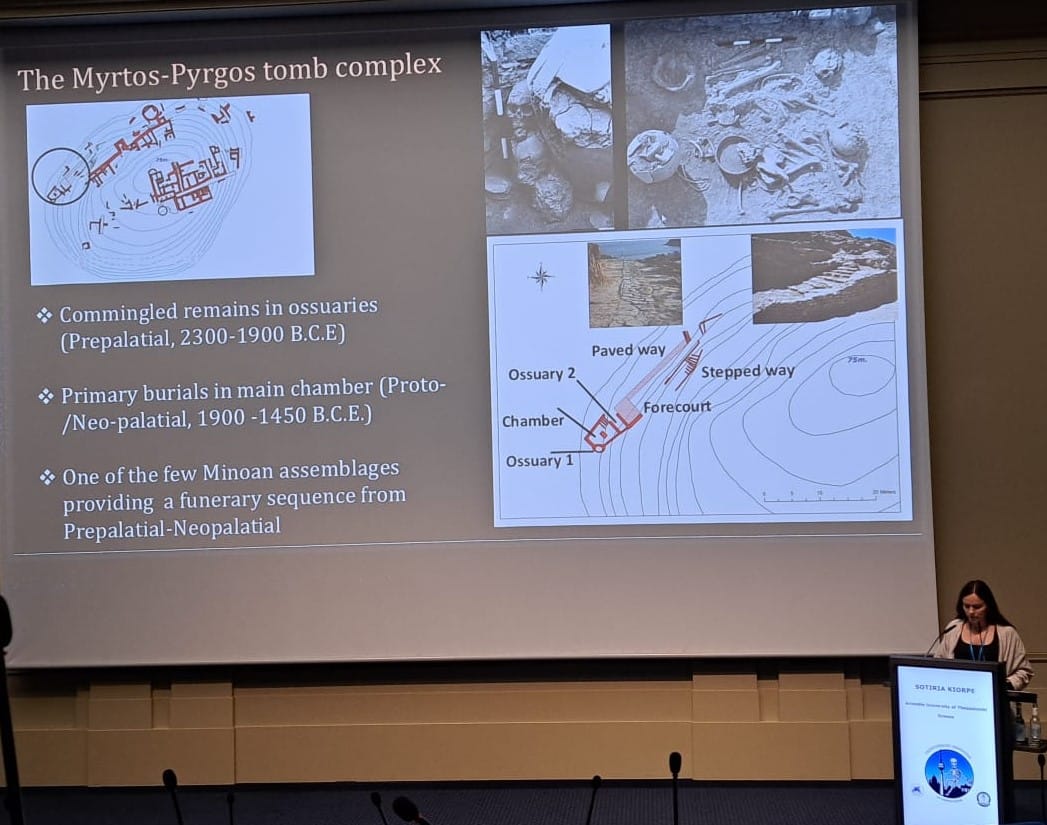
In the first week of August, our team participated in the 25th European Paleopathology Conference in Berlin. The presentation, entitled “Reconstructing the Palaeopathological Profile of an ‘Elite’ Group: A Case Study from the Minoan Myrtos-Pyrgos House Tomb,” examined evidence of health, disease, physical activity, and trauma among the individuals buried at the site. Our study documented a wide range of pathological conditions, including degenerative joint disease, healed antemortem trauma, infection, and signs of physiological stress, suggesting physically demanding lives and periods of hardship. Of particular interest is the fact that similar diseases were observed in both the individuals buried in the ossuaries during the Late Prepalatial period and the few primary burials deposited in the main chamber during the Protopalatial and Neopalatial periods. These findings challenge the interpretation of the individuals buried in the main chamber as representing a distinct ‘elite’ group with substantially different living conditions. Instead, the preliminary results suggest that social differences may have been expressed primarily through funerary practices and the treatment of the dead.
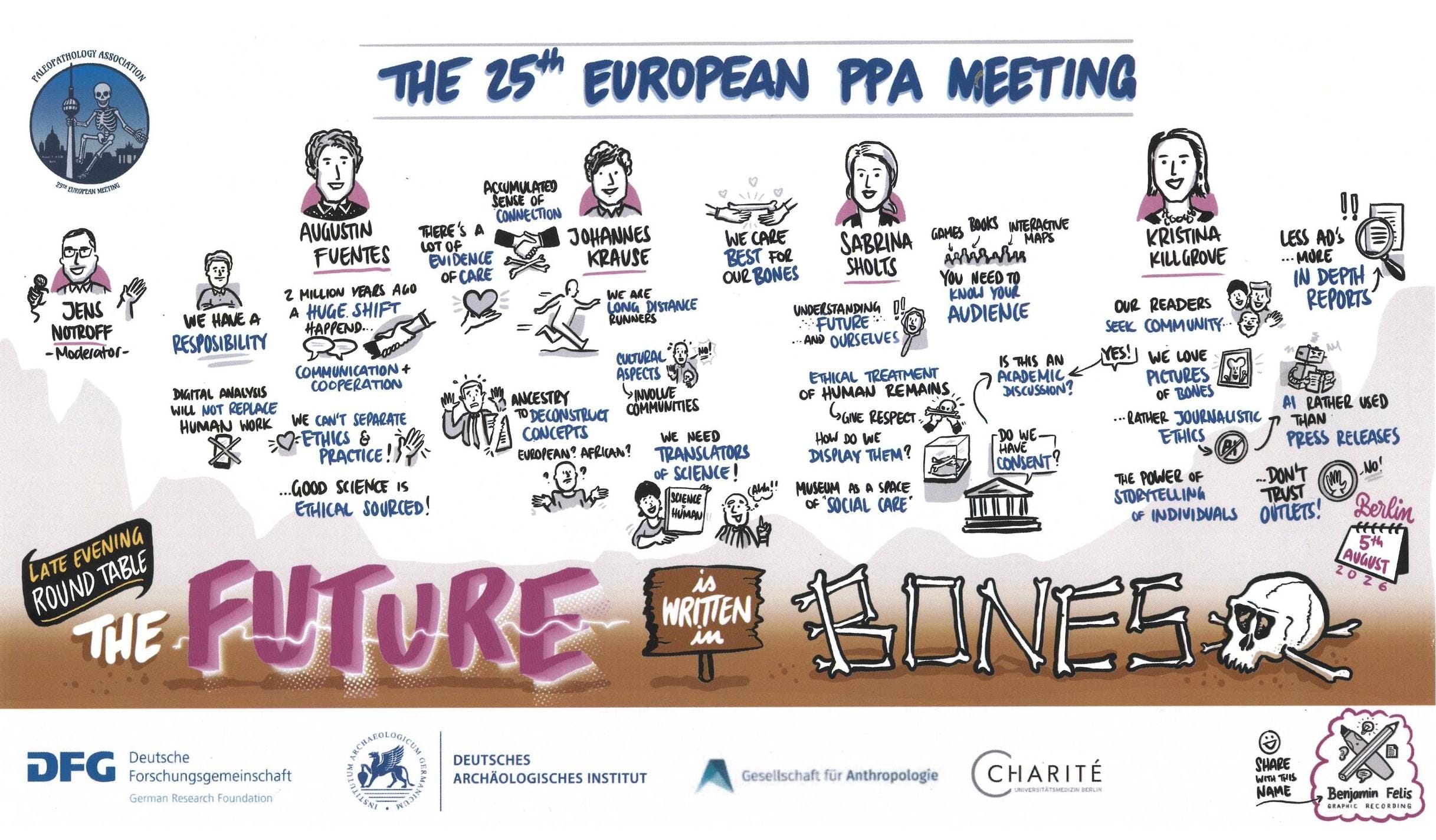
The conference also featured a lively panel discussion, “The Future is Written in Bones,” bringing together renowned scientists to discuss the ethics of working with human remains, good scientific practices and the ways in which research is communicated to the public. A key take away was the important role of science journalists as “translators” of research and the need for accurate and ethical communication of scientific results (for a graphic summary of main points see figure produced by Benjamin Felis).
Conference website:
https://www.dainst.org/en/the-25th-european-ppa-meeting
Co-authors of the paper presented: Sotiria Kiorpe, Sevi Triantaphyllou, Gerald Gadogan, Jonathan Musgrave
Thanks to MAT (Mediterranean Archaeological Trust) and INSTAP SCEC for funding and support